Artificial intelligence
Alibaba's Omni Model Undercuts Gemini Fivefold on Input. It Also Shipped Without Weights
Alibaba released Qwen3.8-Omni-Flash on Friday at $0.15 per million input tokens, a fifth of Gemini 3.8 Flash's current rate. The weights did not ship with it, and on Alibaba's own benchmarks the model wins on audio while losing on agentic video.
 MAI
MAI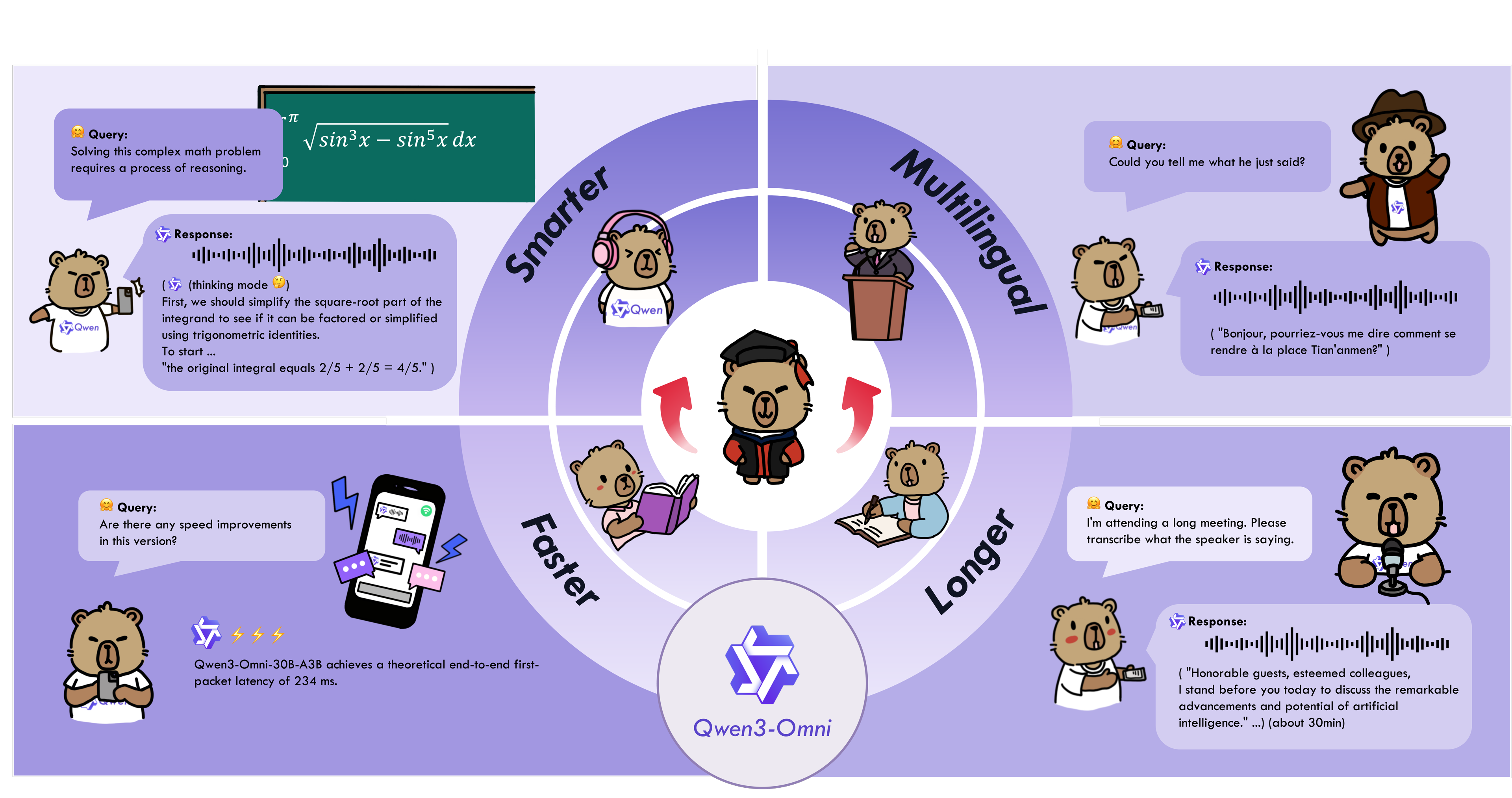
Alibaba's Qwen team released Qwen3.8-Omni-Flash on Friday morning Beijing time, a natively omni-modal model that takes text, images, audio and video as input and returns text or speech. It has roughly a million tokens of context, covers 113 languages and dialects, and comes in a second variant, Qwen3.8-Omni-Flash-Realtime, aimed at live streaming interaction. It is available through Alibaba Cloud in Beijing, Singapore, Hong Kong, Tokyo, Frankfurt and Virginia.
The specifications are not the story. Two numbers are: the price, and the absence of a weights download.
The price is the product
Qwen3.8-Omni-Flash lists at $0.15 per million input tokens, $0.016 per million cached input tokens, and $0.47 per million output tokens — one rate regardless of whether the input is text, an image, an audio clip or a video. Google's published rate for Gemini 3.8 Flash, the model Alibaba benchmarks against, is $0.75 per million input and $3.75 per million output on the standard tier, and Google's own pricing page says those are promotional through December 31, 2026, doubling to $1.50 and $7.50 on January 1.
| Per 1M tokens | Qwen3.8-Omni-Flash | Gemini 3.8 Flash (standard) |
|---|---|---|
| Input, all media | $0.15 | $0.75 → $1.50 on Jan 1, 2027 |
| Cached input | $0.016 | — |
| Output | $0.47 | $3.75 → $7.50 on Jan 1, 2027 |
That is five times cheaper on input and eight times cheaper on output today, and ten and sixteen times cheaper once Google's promotional window closes. Alibaba frames the cut against its own previous model rather than Google's: it says audio input now costs more than 98 percent less than on Qwen3.5-Omni-Plus, and combined audio-and-video input more than 93 percent less.
The direction of that framing matters. Alibaba is not claiming a cheaper model than Google so much as claiming a cheaper way to serve one. Audio and video are where multimodal inference actually gets expensive — a minute of speech consumes far more tokens than a paragraph of text — so a 98 percent cut on audio input is a statement about the serving stack, the tokenizer and the encoder, not about model quality. It is also the kind of claim nobody outside Alibaba can audit.
The benchmarks describe an audio model
Alibaba published a comparison against Gemini 3.8 Flash. Read the whole table rather than the headline, because it does not say what the announcement says.
| Benchmark | Qwen3.8-Omni-Flash | Gemini 3.8 Flash |
|---|---|---|
| SpotSoundBench | 67.2 | 39.7 |
| WildClawBench-MM | 71.0 | 58.9 |
| MMAU | 81.8 | 76.9 |
| DailyOmni | 85.1 | 84.0 |
| OmniGAIA | 74.0 | 78.6 |
| AgenticVBench | 36.8 | 45.0 |
Every one of these figures is Alibaba's, produced by Alibaba, with no independent reproduction as of publication. Taken at face value, they show a model that is well ahead on tasks that are fundamentally about listening — sound identification, audio understanding — roughly level on mixed audio-visual comprehension, and behind on the two benchmarks that ask the model to act on video over multiple steps. Alibaba's own summary concedes audio-visual performance is "close to" Gemini while audio alone exceeds it. The table supports the narrower reading: this is an audio model that can also see, not a general omni model that has passed Google.
One figure deserves particular suspicion. Alibaba reports speaker diarization error on AliMeeting falling from 88.11 percent to 3.35 percent between generations. An 88 percent error rate means the previous model could not attribute speech to speakers at all. Most of that improvement is a repair, not an advance — and AliMeeting is Alibaba's own dataset.
The weights stayed home
Qwen built its standing on open weights. The previous generation, Qwen3-Omni, shipped as a downloadable model on GitHub and Hugging Face with published architecture. Qwen3.8-Omni-Flash did not. Alibaba released multimodal plugins and development tooling around it, but the model itself is API-only, and no Qwen upload has appeared on Hugging Face for over two weeks.
This is consistent rather than contradictory. If the advance being sold is serving efficiency, weights would not demonstrate it — you cannot verify a 98 percent cost reduction by downloading a checkpoint, you can only verify it by paying the bill. And an efficiency advantage is worth precisely as much as the cloud you meter it through. Open weights let a competitor run Qwen on someone else's hardware; an API does not. Alibaba has a cloud business to defend in exactly the regions where this model launched.
The open-weight strategy that made Qwen the default reference point for Chinese AI was never the goal. It was a way to accumulate developers when Alibaba had no frontier claim to make. It now has a price to make instead.
Sources: Qwen3.8-Omni-Flash announcement (Qwen) · 阿里发布 Qwen3.8-Omni-Flash 全模态模型 (IT之家) · Qwen3.8-Omni-Flash benchmark and pricing detail (AIbase) · Gemini Developer API pricing (Google) · Alibaba's Qwen3.8-Omni-Flash undercuts Gemini on audio (Neowin) · Qwen3-Omni (GitHub) · Qwen3-Omni-Flash model documentation (Alibaba Cloud Model Studio)