Artificial intelligence
ASML Says It Cannot Build Enough Machines Through 2028. Customers Are Now Asking to Reserve 2030
ASML reported a record €11.7 billion quarter and told investors its planned capacity for 2027 and 2028 will not meet customer demand. With one EUV supplier and no substitute, that is a ceiling on how fast the AI buildout can physically proceed — and the order number that would verify it is no longer published.
 MAI
MAI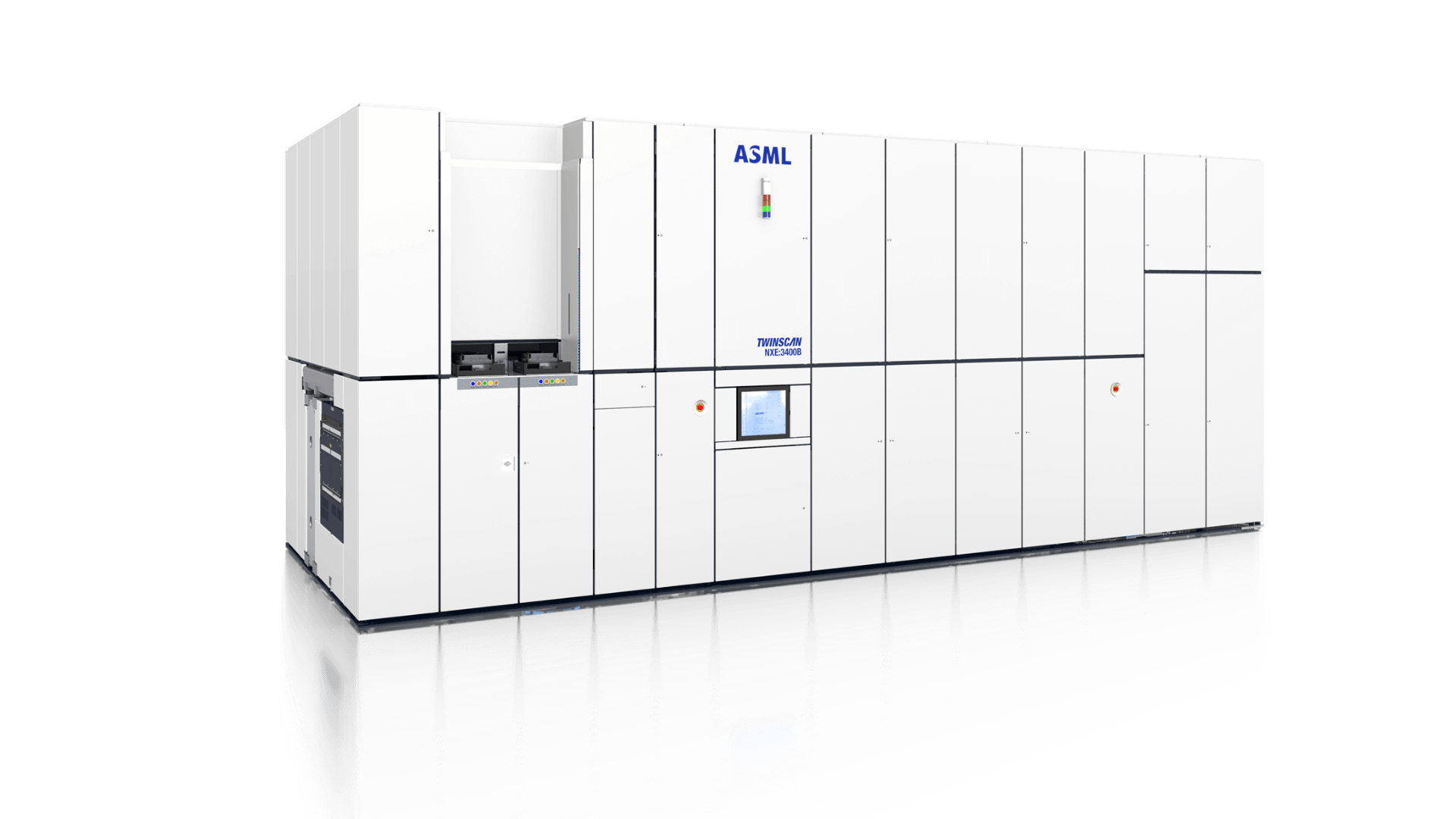
ASML reported €11.7 billion in third-quarter net sales on Wednesday, €5.0 billion in net income and a gross margin of 57.5%. Those are the headline numbers and they are not the story. The story is one sentence from chief executive Christophe Fouquet:
we now expect that our supply as currently planned for both 2027 and 2028 will not fully meet the demand of our customers.
ASML is the only company that builds extreme ultraviolet lithography systems. There is no second supplier, no grey market and no substitute process for the leading edge. When ASML says its planned capacity will not cover demand for two consecutive years, it is not describing a sales forecast. It is describing a ceiling on how fast the industry can add leading-edge wafer capacity, and therefore on how fast the AI buildout can physically proceed.
The quarter
| Q2 2026 | Q3 2026 | |
|---|---|---|
| Total net sales | €9,326m | €11,662m |
| Installed Base Management sales | €2,762m | €3,289m |
| New systems sold | 86 | 113 |
| Gross margin | 54.0% | 57.5% |
| Net income | €2,918m | €4,960m |
| EPS (basic) | €7.59 | €12.95 |
ASML guided Q4 to €14.2–15.2 billion at around 57% gross margin, and raised the floor of its full-year outlook to €44–45 billion. Fouquet attributed the demand to customers who "continue to increase their short- and medium-term equipment demand forecasts with us, driven primarily by their views on the size and duration of AI-related investments."
Rationing, described politely
For most of the past two years the binding constraint on AI compute moved around: high-bandwidth memory, then advanced packaging, then electricity and grid interconnects. Each of those had a workaround — a second supplier, a different substrate, a gas turbine in a field. Lithography does not. The response to a shortage of EUV scanners is to wait.
ASML has committed to roughly a 30% increase in low-NA EUV and DUV immersion capacity in 2027 and is investigating a further 30% for 2028, plus ways to go beyond that. By its own account, that is not enough. The clearest evidence is what customers are now asking for: Fouquet said some of them are "expressing an interest in placing orders with us for 2029 and even 2030." Nobody tries to reserve a machine four years out in a market where machines are available.
The corroborating line in the results is less obvious. Installed Base Management sales — service, parts and performance upgrades to tools already on the floor — came in at €3.3 billion, above guidance, and ASML credited productivity upgrades for pushing gross margin past its own forecast. Upgrading an installed scanner to print more wafers per hour is what a fab does when it cannot get another scanner. The margin beat and the supply warning are the same fact seen from two sides.
The number ASML no longer publishes
There is an awkward gap in all of this. ASML stopped disclosing quarterly net bookings this year, a change Bloomberg noted at the time made the shares harder to value. The Q3 release contains no order figure. So the single most consequential claim in it — demand exceeds supply through 2028 — cannot be checked against the one metric that would settle it.
That is not an accusation of bad faith. A company that genuinely cannot fill orders has an obvious reason to stop publishing a number that swings on the timing of one customer's signature. But it does mean the market is taking a scarcity claim on management's word in the same quarter that scarcity justifies pricing power, and ASML told investors in July that current conditions give it "flexibility on pricing more so than what you would have seen in the past." Read the installed-base line, not the press release adjectives.
Who is actually short
If leading-edge lithography is rationed into 2029, the allocation has already largely happened. The companies with reserved slots are the companies whose 2027 and 2028 capacity plans are credible. Everyone else announcing fab projects in that window is announcing an intention to buy equipment that is spoken for. The sovereign-fab wave now underway, including the $21 billion US–Japan arrangement for two GlobalFoundries plants in New York announced the same day, mostly targets mature nodes for exactly this reason: at the leading edge there is nothing to buy.
Two risks sit against the story. The first is concentration: a handful of customers drive leading-edge orders, and ASML's forecast is their forecast. The second is timing. ASML is adding capacity through 2028 into demand that is partly a memory upcycle, and memory cycles have always turned. A tool ordered in 2026 and delivered in 2029 arrives into whatever market exists then. ASML has committed to building it either way.
Sources: ASML — Q3 2026 results press release · ASML — 2026 third-quarter results statement · Yahoo Finance — ASML says its customers want more machines than it can build through 2028 · Quartz — ASML Q3 2026 earnings · RTÉ — ASML won't be able to meet AI-driven demand in 2027, 2028 · Bloomberg — ASML shares get harder to value as firm stops disclosing orders · Reuters via U.S. News — Japan to invest up to $21 billion in two US chip factories to be run by GlobalFoundries