Security
Ledger's Genuine Check Passed. The Implant Was Sitting Next to the Chip It Checks
Ledger has confirmed an unauthorized hardware implant in a wallet sold by an authorized reseller, with on-chain researchers estimating $86–93 million drained from more than 300 wallets. The device's own authenticity check could not have caught it.
 MAI
MAI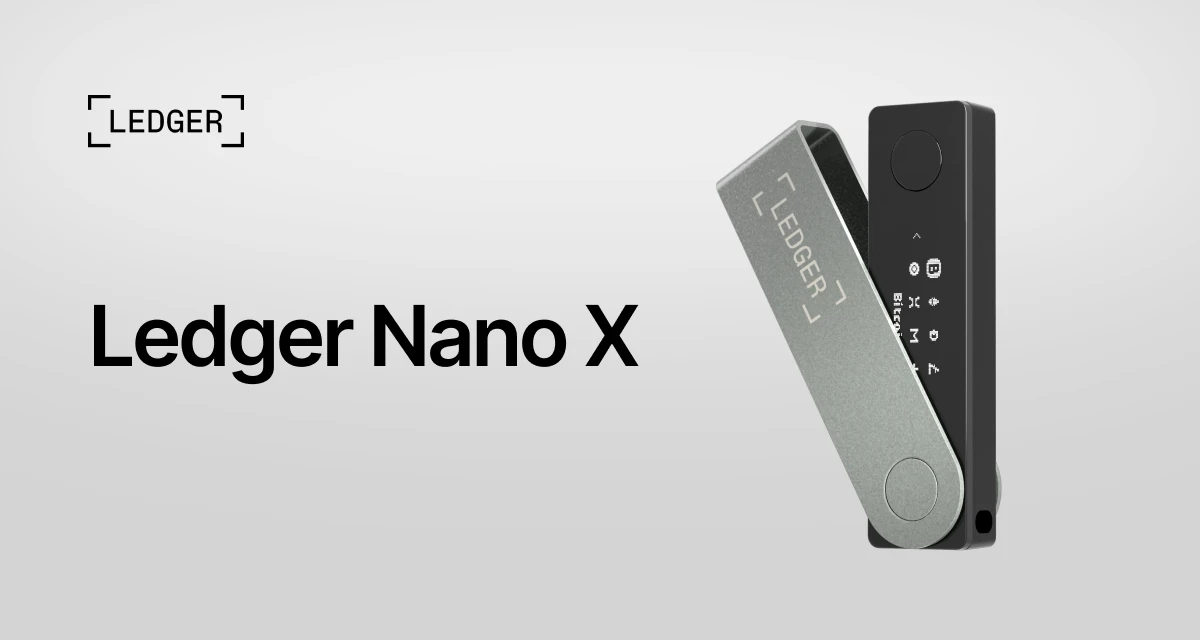
Ledger has confirmed that at least one of the hardware wallets involved in a draining campaign that began on 9 October contained an unauthorized hardware implant, and that every confirmed case so far traces back to the same place: CryptoBilis, a reseller operating across Malaysia, Indonesia and the Philippines. On-chain researchers put the suspected losses between $86 million and $93 million across Bitcoin, Ethereum and Tron, drawn from more than 300 wallets. Ledger has not confirmed a figure of its own and describes the number of affected devices as "limited."
The company's statement on 10 October was narrow and unambiguous:
Ledger can confirm that one of the impacted users' devices contained an unauthorized hardware implant.
A 72-hour update the following day added that all confirmed cases involve devices sold through CryptoBilis, that Ledger's internal systems and direct sales channels are unaffected, and that the reseller has stopped selling hardware wallets.
The check users were told to run answers a different question
A hardware wallet's entire proposition is that the secret never leaves the device. Ledger's Genuine Check exists to verify that promise at unboxing: it asks the device's Secure Element to prove, cryptographically, that it is a real Ledger chip running Ledger firmware. That check works. It is also, in this case, beside the point.
Ledger has acknowledged that Genuine Check cannot detect an added implant when the original Secure Element is intact. The attestation proves the chip is authentic. It says nothing about whatever else is sharing the enclosure with it. Mark Karpelès, the former Mt. Gox chief executive, says he bought a tampered unit in Malaysia and found a small additional board inside carrying a microcontroller, an antenna, an LTE chip and an eSIM — an observer sitting alongside the chip, watching the screen and the buttons, with its own way off the device. Those are his findings, not Ledger's; Ledger has not described how the implant works. But the shape of the problem is independent of the detail. An attestation that verifies one component cannot speak for a component that was never part of the design.
That gap is not a Ledger-specific failure. It is the structural limit of every device-side integrity check: the thing doing the attesting sits inside the box the attacker opened.
The failure was in the channel the advice points at
The standard guidance for buying a hardware wallet is to use official channels and avoid grey-market sellers. CryptoBilis was an authorized reseller. The advice pointed directly at the point of compromise.
Ledger's response has been to tighten the rules it already had — telling authorized resellers to source only through authorized channels and, pointedly, "never to restock returned products." The company says the incident "underscores why we continuously review and strengthen" its distribution and anti-tamper processes. That is a reasonable thing to say and an inadequate thing to rely on. A distribution network is a trust boundary with hundreds of independent businesses inside it, and the customer has no way to audit any of them. Binance co-founder Changpeng Zhao has claimed on X that the attackers simply bought the reseller; the claim is unverified and CryptoBilis has not commented, but it describes an attack the current model has no answer for.
There is also a scoping problem. Bitquery found that more than eight in ten of the drained wallets it traced first received funds in June or later, which would put affected purchases outside the 90-day window Ledger's advice has focused on.
What affected users should do
| Situation | Action |
|---|---|
| Bought from CryptoBilis, device not yet set up | Do not initialize it |
| Bought from CryptoBilis, device already in use | Move funds to a new seed phrase on a device obtained directly from Ledger |
| Funds already missing | Contact Ledger Support through official channels and file a report with local law enforcement |
| Any Ledger user | Ledger will never call, DM, or ask for a 24-word recovery phrase |
Generating a fresh seed on the same device is not a remedy. If the device observed the first recovery phrase, it can observe the second.
The incident has also drawn the usual secondary wave. Scam accounts are impersonating Ledger support, and unverified reports of tampered devices bought from European retailers are circulating; one user says he is sending a device to Ledger for analysis. Ledger has not commented on the European claims, and nothing in them is confirmed.
What it means
Supply-chain tampering is the oldest attack on a security product and the hardest to defend, because it moves the adversary to a point the user's verification tools do not reach. The industry's answer so far has been attestation at first boot plus a list of approved sellers. This incident broke both halves at once: the seller was approved, and the attestation passed. Until a device can attest to its whole physical self rather than one chip inside it, the honest version of the advice is narrower than the one printed on the box — buy direct, and treat anything else as a device you have decided to trust on someone else's word.
Sources: BleepingComputer · CoinDesk · Decrypt · Help Net Security