Artificial intelligence
TSMC Guided Fourth-Quarter Revenue Up 14% and Left Its Capex Range Alone. That Combination Is the Story
TSMC's sixth straight record quarter came with a fourth-quarter guide of US$52.3–54.3 billion, about 14% above Q3, and a 2026 capital budget held at the US$60–64 billion set in July. The extra output is coming from the 2nm ramp rather than new money — and the gross margin shows what that costs.
 MAI
MAI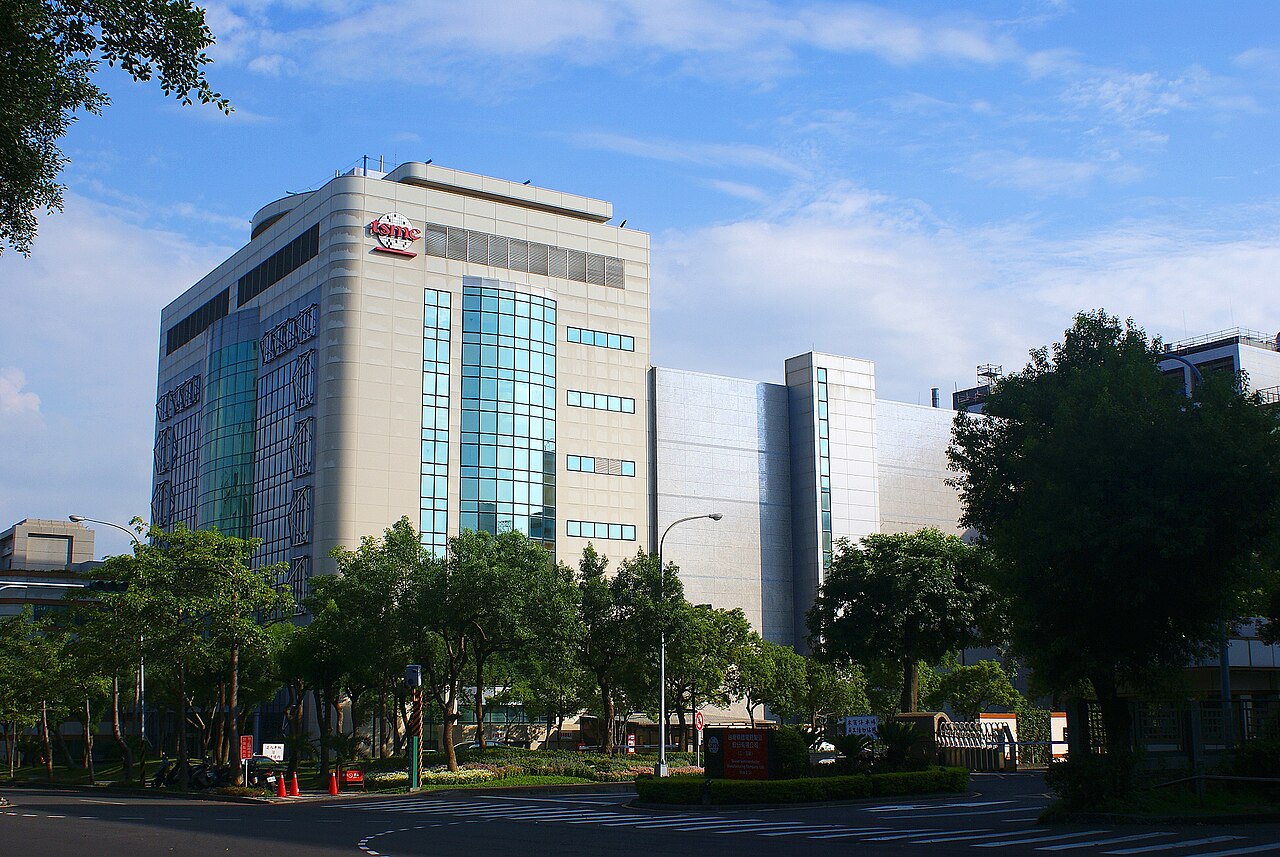
TSMC reported third-quarter revenue of NT$1,494.24 billion (US$46.72 billion) on October 15, with net income of NT$763.06 billion and diluted earnings of NT$29.43 per share, or US$4.60 per ADR unit. Revenue rose 50.9% year on year in New Taiwan dollars and 41.2% in US dollars. Net income and diluted EPS both rose 68.7%, against an LSEG estimate of NT$746.3 billion. It is the sixth consecutive record quarter, and revenue landed above the top of the company's own July guidance of US$44.6–45.8 billion.
The record is not the news. The news sits in two numbers that point in opposite directions.
The guide moved. The capital budget did not
| Measure | Q3 2026 | Change or comparison |
|---|---|---|
| Revenue | NT$1,494.24bn / US$46.72bn | +50.9% YoY (NT$), +17.6% QoQ |
| Net income | NT$763.06bn | +68.7% YoY, +8.0% QoQ |
| Diluted EPS | NT$29.43 (US$4.60/ADR) | +68.7% YoY |
| Gross margin | 66.4% | 67.7% in Q2 2026 |
| Operating margin | 58.7% | guided 56.0–58.0% |
| Q3 guidance (issued July) | US$44.6–45.8bn | actual above the top |
| Q4 2026 revenue guide | US$52.3–54.3bn | ~14% above Q3 at the midpoint |
| 2026 capital expenditure | US$60–64bn | unchanged from July |
Fourth-quarter revenue is guided to US$52.3–54.3 billion, roughly 14% above the third quarter at the midpoint and the largest sequential step the company has guided in this cycle. Chairman and chief executive C.C. Wei lifted full-year 2026 revenue growth to approximately 44% in US dollar terms, up from the "slightly more than 40%" TSMC had been carrying since July.
Against that, 2026 capital expenditure was reiterated rather than raised: US$60–64 billion, the same range set in July, with US$13.8 billion spent in the third quarter. Chief financial officer Wendell Huang said spending across 2026 to 2028 would be "even more significantly higher than the past three years" — a statement about the next three years, not about this one.
A week ago the informative number in TSMC's monthly disclosure was September revenue falling 0.6% month on month while running 54.6% ahead of a year earlier: the signature of a company selling everything it can make. The fourth-quarter guide says that ceiling lifts by about 14% in a single quarter. If new money is not buying the increase, something else is paying for it.
What is paying for it is the node mix
| Node | Share of Q3 wafer revenue |
|---|---|
| 2-nanometer | 8% (3% in Q2 2026) |
| 3-nanometer | 33% |
| 5-nanometer | 28% |
| 7-nanometer | 10% |
| 7nm and below, combined | 79% |
Two-nanometer went from 3% of wafer revenue in the second quarter to 8% in the third, in its first year of high-volume manufacturing. High-performance computing, the segment that carries AI accelerators, was 68% of revenue and grew 22% sequentially — against 10% for smartphones, 23% for automotive off a 4% base, and a 12% decline in digital consumer electronics.
That is where the extra output is coming from, and it has a visible price. Gross margin fell to 66.4% from 67.7%, which the company attributes mainly to dilution from the 2nm ramp. Huang put dilution from overseas fabs at roughly 2% this year, rising to 3–4% as the US plants ramp. TSMC is converting a new node into volume faster than it is converting money into fabs, and the margin line is the receipt.
The demand line did not soften, which is the point
Wei's description of the order book was unqualified:
AI-related demand is extremely robust and far above our supply capability.
A company that says that and then declines to raise its capital budget is making a specific claim: the binding constraint right now is not capital. It is the time it takes to qualify, equip and yield a leading-edge node. That is also why the forward signal has moved one process generation out. Wei said customer engagement on A14 is running "actually higher than the 2-nanometer activities so far," with risk production in 2027 and volume production in 2028, while N2 capacity is expected to more than double in 2027.
Read together, the quarter says the AI order book is being filled by ramping what is already built rather than by building more — and that the 2027 answer was largely settled by capital committed in 2024 and 2025. The 2029 answer is being decided now, and TSMC did not change that number today.
What would falsify this
The reading above fails if the next call raises spending materially rather than restating a three-year direction. A January revision that lifts 2027 capex above the current trajectory would mean TSMC concluded that money, not time, is the constraint after all. Absent that, the ceiling for 2028 is already set, and the companies waiting on accelerator silicon are waiting on a schedule rather than on a purchase order.
One note on the reaction. Taipei-listed shares closed down about 2% ahead of the release, inside a broader chip selloff. The quarter beat on revenue, profit and margin. The tape was pricing something other than this quarter.
Sources: TSMC — Third Quarter 2026 Results · TSMC Investor Relations — 3Q26 results and 4Q26 guidance · CNBC — TSMC posts record profit for a sixth straight quarter · TIKR via Yahoo Finance — TSMC posts a sixth straight record quarter · MarketBeat — TSMC Q3 earnings call highlights · BigGo Finance — TSMC lifts 2026 growth target to 44%, 2nm hits 8% of revenue · TechSoda — TSMC 3Q26 earnings call: A14 to outgrow 2nm
Cover image: TSMC Fab5 by Peellden, CC BY-SA 3.0, via Wikimedia Commons.