Artificial intelligence
The US and China Agreed to Stop Calling It Artificial Intelligence. That Is the Most Specific Thing They Agreed To
A White House fact sheet from Xi Jinping's state visit establishes a U.S.-China Super Intelligence Dialogue, a first exchange by November 2026, and a bilateral channel for "SI incidents." It also records that the two leaders agreed to stop saying "artificial intelligence" — the one clause in the passage that decides anything.
 MAI
MAI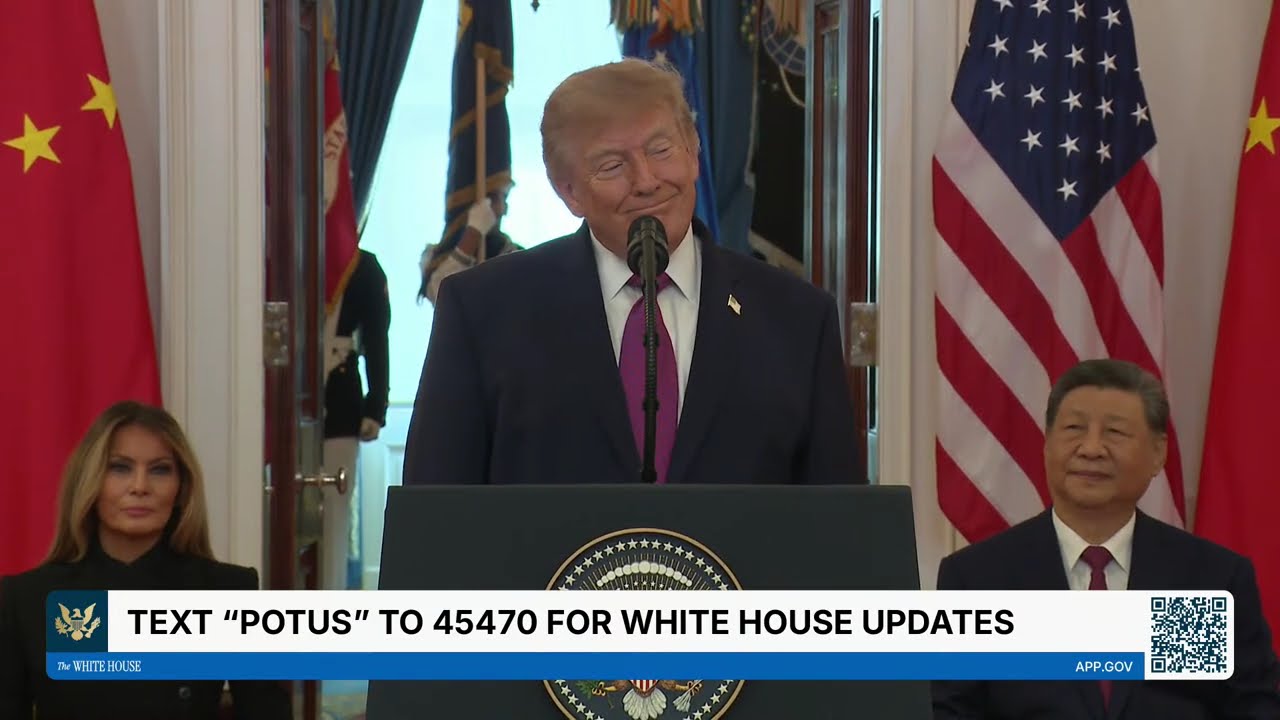
The White House published a fact sheet on Friday listing what came out of Xi Jinping's state visit to Washington. Three sentences in it concern the technology both governments describe as the defining competition of the century.
The two leaders agreed to use the term "super intelligence" rather than "artificial intelligence" to describe the applicable emerging technologies.
The two countries established the U.S.-China Super Intelligence (SI) Dialogue to exchange views on risks and benefits related to SI. The next exchange will occur by November 2026. The United States and China also agreed to establish a bilateral communication channel for SI incidents.
That is the entire AI content of the document. Five days ago this existed only as a proposal from one side: Treasury Secretary Scott Bessent described a "notification mechanism" after meeting Vice Premier He Lifeng in New York, and nothing had been signed. It is now a joint deliverable with both presidents' names behind it. The upgrade is real, and it is narrower than the announcement sounds.
What changed, and what did not
| Discussed 20 September | Agreed 26 September | |
|---|---|---|
| Status | One side's account of talks; nothing signed | Joint deliverable in a White House fact sheet |
| The dialogue | Proposed | Established; next exchange by November 2026 |
| The channel | Proposed "notification mechanism" | Agreed "bilateral communication channel for SI incidents" |
| What counts as an incident | Undefined | Undefined |
| Who calls whom, how fast, under what obligation | Undefined | Undefined |
| Beijing's position | Xinhua called the talks "candid, in-depth and constructive" | No immediate comment on the White House text |
Axios, which reported the fact sheet first, put the gap plainly: it is not clear what kind of incidents would rise to the level of using the channel, or what notifications each side would give the other. Al Jazeera's Alan Fisher described the summit as "a lot more pomp than progress," with the continuation of dialogue itself as the biggest deliverable.
The renaming is the operative clause
The only sentence in that passage that decides anything is the one about vocabulary, and it decides more than it appears to.
"Artificial intelligence" describes systems that exist, ship, and are in use on both sides of the Pacific right now. "Super intelligence" describes systems that do not exist and that neither country's industry claims to have built. A channel scoped to SI incidents is therefore a channel scoped to a category with no current members. Every model either government could plausibly need to call the other about — every deployed system, every agent, every military decision-support tool — sits outside the term the two leaders chose.
Whether that was the intention is not knowable from a fact sheet. The effect is available for inspection. The November agenda will be governed by a word neither government has defined, attached to a class of system that has not been built, in a document that says nothing about the systems that have been.
There is a second effect worth noting. "Superintelligence" is a term of art borrowed from the frontier labs, where it does specific work: it locates the serious risk in the future tense, which is convenient for anyone shipping in the present one. Friday's fact sheet is the first time either government has adopted that framing at head-of-state level. The labs' preferred vocabulary is now the diplomatic vocabulary.
Read it next to the arms-control line
The same fact sheet proposes trilateral arms-control negotiations with Russia. The placement is informative: Washington has filed SI under strategic stability, not consumer protection, competition policy, or export control — none of which the AI passage touches. That is consistent with the instrument chosen. A crisis hotline is a nuclear-era device, and it does one narrow job. It does not prevent an error. It buys the interval between the error and its consequences.
The bilateral precedents are not encouraging. A direct secure line between the two capitals has existed since 1997 and a military-to-military hotline since 2008, and the standing complaint about the latter is response delay. Both cover events each side can independently observe: a launch, an intercept, a collision. An SI incident may be entirely internal to one party's decision-making, invisible from outside, and humiliating to disclose. Nothing in Friday's text creates an obligation to make the call.
Three things to watch before November
A definition of "incident" is the first. Named points of contact with a response time is the second. The third is a readout from Beijing that commits China to the same two mechanisms in its own words — as of Friday there was none, and Xi's own public remarks used the old term, telling reporters the two countries have "the capability and responsibility to develop and manage AI for good" and calling for "a healthy competition" that is "a race of catching up with one another." Trump said the visit had produced "great strides, very positive for both countries."
A first meeting date and an agreed noun are not nothing between two states that build these systems and have never shared a vocabulary for them. They are also not a mechanism. What the two governments agreed this week is to talk by November about a category of technology that does not yet exist, using a word they have jointly declined to define.
Sources: Fact Sheet: President Donald J. Trump Advances a Fair and Reciprocal Relationship with China While Hosting Historic State Visit (The White House) · U.S. and China agree to "super intelligence" dialogue amid AI tensions (Axios) · China, US to open AI "communication channel" after summit, White House says (Al Jazeera) · U.S. and China Set Up Superintelligence Dialogue, First Talks in November (Seoul Economic Daily) · Trade truce extension aside, was AI the real Xi-Trump summit breakthrough? (South China Morning Post) · Bessent Says U.S. And China Discussed AI Dialogue And 'Notification' For Safety Incidents (Forbes)