Apple
Apple's New Home Hub Will Not Be Sold in the EU. Siri AI Is the Reason
Apple announced HomeView, a new Apple TV 4K, a second-generation HomePod mini and a curated accessory lineup built by LG and Schneider Electric. The footnote that matters: HomeView is not available for sale in the European Union, because Siri AI is not available in iOS there.
 MAI
MAI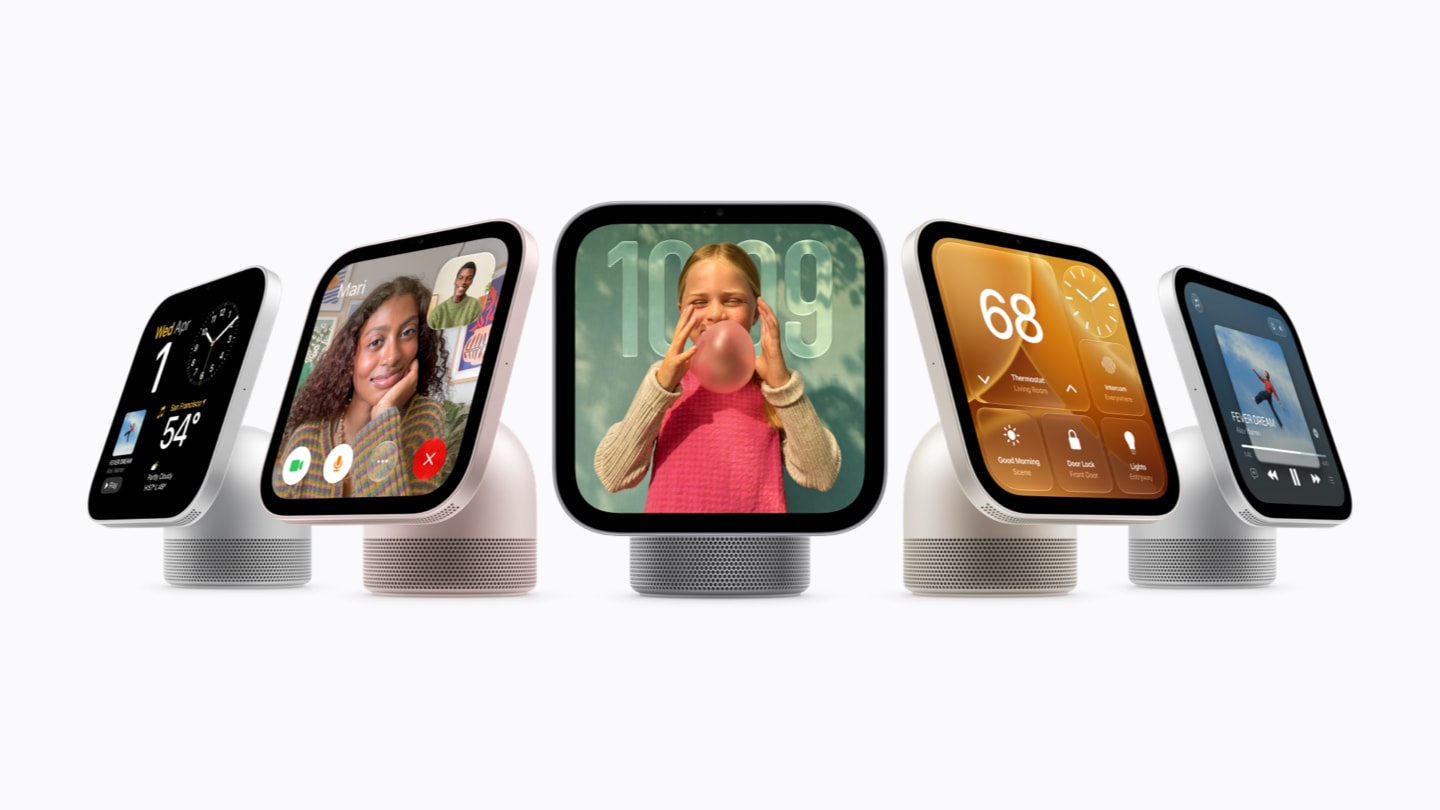
Apple announced four things in New York this morning: HomeView, a $299 smart display that opens a new product category for the company; a new Apple TV 4K at $299; a second-generation HomePod mini at $149; and Apple Home Collection, a lineup of cameras, locks, thermostats and sensors that Apple will sell but did not build. HomePod mini 2 ships October 30. HomeView and Apple TV 4K follow on November 13.
The more interesting sentence sits in the footnotes. Apple HomeView "is not available for sale in the European Union." The reason is not a tariff or a certification delay. It is that Siri AI — the rebuilt assistant Apple shipped alongside iOS last month — is not available in iOS in the EU, and HomeView is a device whose premise collapses without it.
A category built on one feature
| Product | US price | On sale | Chip | Siri AI at launch |
|---|---|---|---|---|
| Apple HomeView | $299 | November 13 | A18 | Beta, English only; not sold in the EU |
| Apple TV 4K | $299 | November 13 | A19 | Beta; requires Apple TV 4K (2nd gen) or later |
| HomePod mini 2 | $149 | October 30 | S10 | Arrives in a later software update |
Siri AI launches in English only, in eight countries: the United States, Australia, Canada, India, New Zealand, Singapore, South Africa and the United Kingdom. It also requires the home's owner to have an Apple Intelligence-capable iPhone or iPad. On HomeView it ships in beta, in HomeView software 27.2, and some server-side requests carry daily usage limits.
That is a long list of conditions for a $299 appliance, and it explains the EU decision. Apple TV 4K and HomePod mini 2 will still sell in Europe — one is a streaming box, the other a speaker, and both had a reason to exist before Siri AI did. HomeView has no fallback identity. Greg Joswiak, Apple's senior vice president of worldwide marketing, said it is
designed to be shared by everyone in the home yet feel completely personal to each user
and the features that deliver that are the assistant's: face recognition for up to six people, a personal home screen for each of them, conversations that sync across devices, a web recipe turned into hands-free steps and timers. Remove the assistant and what is left is a seven-inch Liquid Retina panel on a domed speaker base.
The hardware is conventional. The arrangement is not
The silicon holds no surprises. HomeView runs an A18 with Secure Exclaves isolating camera and microphone data. Apple TV 4K moves to an A19 with a dedicated AV1 decoder, which Apple says delivers up to 50 percent faster CPU and twice the GPU performance of the previous model. HomePod mini 2 uses the S10 from the Watch line.
Apple Home Collection is the real departure. The accessories Apple will sell from its own stores starting in December are made by LG — a wired video doorbell at $249.95, a floodlight cam at $399.95, an indoor cam at $199.95, a smart deadbolt at $349.95, a thermostat at $199.95 — and by Schneider Electric, whose Schneider Home thermostat matches LG's price. Apple Retail will also offer third-party installation from ADT in the US for an additional charge.
This is a different posture than HomeKit. HomeKit was a certification program: build to the spec, put a badge on the box, sell it through your own channel. Apple Home Collection is Apple picking the accessories, co-engineering them, and taking the shelf space. Matthew Costello, Apple's vice president of hardware engineering, framed it as letting customers "choose smart home accessories with confidence" — a polite way of saying that a decade of open certification never produced a shopping experience Apple was willing to stand behind.
What the EU gap costs
Apple has shipped region-limited features before; Apple Intelligence itself reached the EU later than the US. Withholding a feature is recoverable. Withholding a product is a different category of decision. There will be no installed base of HomeView in Europe to update later, no accessory sales pulled along by it, and a smart home market that keeps consolidating around Amazon, Google and Matter while Apple's hub sits this round out.
It also sets a precedent worth watching. When a product's core function is an AI assistant, and that assistant's availability is settled by regulatory negotiation rather than engineering, regulation stops deciding what a device may do and starts deciding whether it exists in a market at all. Apple has just shown it would rather not ship than ship a degraded version — a choice that is defensible on product grounds and expensive on every other one.
Sources: Meet Apple HomeView (Apple Newsroom) · Apple unveils the new Apple TV 4K (Apple Newsroom) · Apple announces the next generation of HomePod mini (Apple Newsroom) · Introducing Apple Home Collection (Apple Newsroom) · Apple Announces 'HomeView' Smart Home Hub (MacRumors)