Apple
Apple Is Reported to Enter the Smart Home on October 13. The Hub Is Not the Product — Siri Is
Bloomberg says Apple will announce a new home hub, a new HomePod mini and a new Apple TV on October 13. Apple has confirmed nothing — but the reported design gives away what the device is actually for, and it is not sound.
 MAI
MAI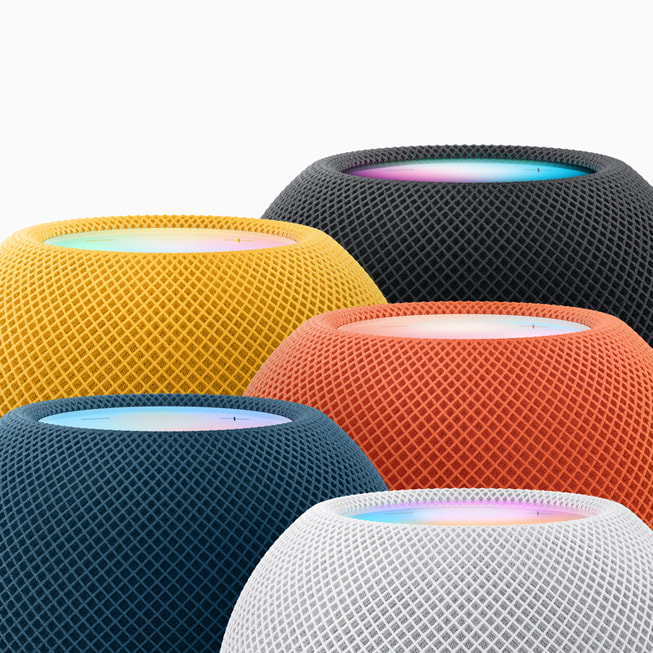
Bloomberg reported on Wednesday that Apple will make its long-delayed push into the smart home on October 13, announcing three products at once: an all-new home hub, the first new HomePod mini since 2020, and the first new Apple TV since 2022.
Apple has announced nothing. It did not respond to a Reuters request for comment. Everything below is Mark Gurman's reporting, and a date two weeks out is a date that can move. Taken at face value, though, it is the most consequential thing Apple has done outside the iPhone in years — and the hardware is the least interesting part of it.
What is reported to be coming
| Product | Reported change | Last refreshed |
|---|---|---|
| Smart home hub (codenamed J490) | Entirely new: a roughly 6-inch square display on a rounded metal base, in countertop and wall-mounted versions | New category |
| HomePod mini | Existing design retained, faster processor for AI work | 2020 |
| Apple TV | Existing design retained, faster processor for AI work | 2022 |
No prices have been reported for any of the three.
The hub is the one that matters. MacRumors describes a square panel about as thick as an iPhone, held on a polished arm above a rounded aluminium base that houses the microphones and speakers, with a single FaceTime camera on the front, a quarter-inch bezel, manual tilt, USB-C power and no battery. The reference point everyone has reached for is the iMac G4, and it is the right one: a screen that floats free of its base and can be pushed around by hand.
The device is a delivery mechanism for Siri
Strip away the arm and the aluminium and what is left is a screen in a kitchen that is always listening. Apple has tried to sell that before — the HomePod, twice — and the thing that made it a difficult product was never the speaker. It was that the assistant behind it could not do enough to justify a permanent place on a counter.
What is reported to be different is that the hub runs a new operating system blending elements of iOS, tvOS and watchOS, built around the rebuilt Siri, and that it identifies who is standing in front of it. Bloomberg says the hub will recognise individual household members and provide personalised content and responses based on their data and accounts, by voice or face, with an iPhone available as a second factor. A visitor mode hides personal information.
That is a meaningful design choice, and it is the one Apple will have to defend. Recognising faces in a family kitchen is how the device becomes useful — it is also a camera and a microphone in the most private room Apple has ever asked to occupy. The answer will be the usual one, on-device processing, and it will need to be a better answer than usual.
It is also the first real test of the new CEO
Bloomberg frames October 13 as "a critical product expansion for the company under new Chief Executive Officer John Ternus," who took the job earlier this month. That framing is fair. Three products, none of them an iPhone, shipped in mid-October rather than folded into a September keynote, matches what Bloomberg has separately reported about Ternus wanting a broader range of devices and launches spread through the year instead of one seasonal cliff.
It is worth being precise about what would be proven. MacRumors reported on September 21 that the smart home display was coming as soon as next month; Bloomberg's own wording is that the push is "long-delayed." The product has slipped because the Siri it depends on was not ready. Shipping it on a stated date is not a small thing for a company whose most visible failure of the last two years has been announcing AI features it could not deliver on schedule.
What is still missing
The full-sized HomePod is not on the list. Gurman says Apple aims to eventually update it, with a faster processor and support for the more capable Siri, but no timing has been reported. The current model has been on sale since 2023 and recently went from $299 to $349.
Apple is also reported to be developing broader smart-home software and expanding HomeKit to new categories of connected products, working with third-party manufacturers on devices built for the Siri platform. That is the part that decides whether any of this becomes an ecosystem rather than three boxes — and it is the part with no date attached at all.
The read
Amazon and Google took the smart home a decade ago by selling cheap speakers at scale and then struggling to make money from them. Apple is not going to win on price and does not appear to be trying to. Its pitch, as reported, is that the assistant is finally good enough and that a device which knows who you are without sending your face anywhere is worth paying for.
Both halves of that have to be true. October 13 is when we find out whether Apple believes the first one.
Sources: Bloomberg: Apple Is Finally Ready to Enter Its Next Big Category: the Smart Home, Reuters via KSL: Apple plans to make push into smart-home market on Oct 13, Bloomberg News reports, 9to5Mac: Apple's HomePad smart home hub launching on Oct 13, MacRumors: Apple Smart Home Hub to Feature iMac G4-Style Design, MacRumors: Apple Working to Expand HomeKit, MacRumors: Apple Still Plans to Release a New Full-Sized HomePod, MacRumors: Apple Smart Home Display Coming as Soon as Next Month