Apple
Apple Raised Apple TV to $14.99. Seventeen Days Later It Started Giving It Away
Apple has folded Apple TV, Apple Arcade and Apple Music Select into iCloud+ at no extra charge in over 100 countries, and stopped selling them — or Apple One — separately there. Storage, not content, is now the anchor product.
 MAI
MAI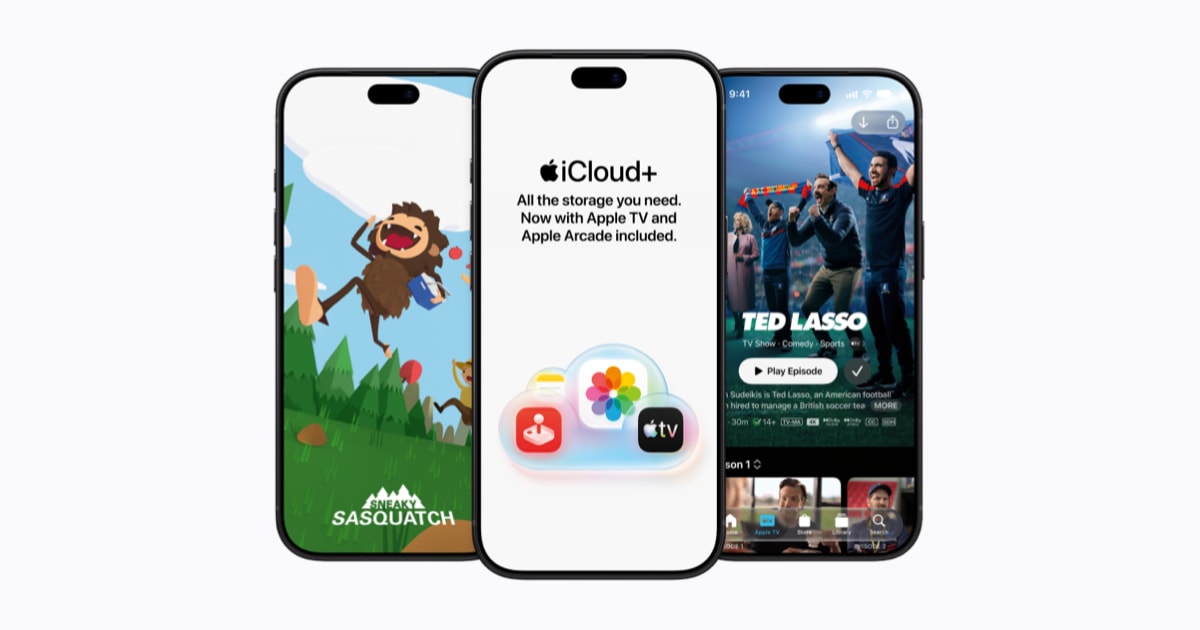
On 28 August, Apple raised the price of Apple TV in the United States to $14.99 a month, up from $12.99. Seventeen days later it announced that in more than 100 other countries, the same service now comes free with a cloud storage plan that costs roughly a dollar.
That is the shape of Apple's services business in 2026: two price lists, aimed at two entirely different problems.
What Apple actually announced
iCloud+ now includes Apple TV, Apple Arcade and Apple Music Select — a set of ad-free stations programmed by Apple Music — at no additional charge, on every tier including the entry 50GB plan. The rollout covers over 100 countries and regions through the end of September, with India, Saudi Arabia, Singapore, Türkiye and the United Arab Emirates among those named. The United States, the United Kingdom, Japan and the other large developed markets are not in it.
| Market | iCloud+ 50GB, per month | Now includes |
|---|---|---|
| India | INR 75 | Apple TV, Apple Arcade, Apple Music Select |
| Singapore | SGD 1.48 | Apple TV, Apple Arcade, Apple Music Select |
| UAE | AED 3.99 | Apple TV, Apple Arcade, Apple Music Select |
| United States | USD 0.99 | Storage only. Apple TV remains USD 14.99 separately |
"We're excited to bring Apple TV and Apple Arcade to iCloud+ users in over 100 countries in one convenient subscription." — Eddy Cue, Apple's senior vice president of Services and Health
The distribution side matters as much as the price. Apple says Apple TV "is expanding to 59 new countries and will be available in 170 countries across the globe." A streaming service that took six years to reach most of the world just did the last third of it as a side effect of a storage bundle.
The bundle Apple is retiring
The less advertised half of the announcement is subtractive. In these markets, Apple TV and Apple Arcade are no longer sold as individual subscriptions through Apple at all. Existing individual subscribers keep uninterrupted access, delivered through iCloud+ instead, and Apple Arcade game progress carries over.
Apple One goes too. In Apple's own words, "with the introduction of iCloud+ with Apple TV and Apple Arcade in UAE, Apple One will no longer be available for new subscribers in UAE." Existing Apple One subscribers are unaffected.
This is a real strategic reversal, not a promotion. Apple One was the 2020 answer to bundling: stack the services, discount the total, move customers up the stack. In price-sensitive markets it evidently did not work — a bundle priced off US subscription tiers is expensive in a country where the entry iPhone is a two-year-old model bought on instalments. Apple has now replaced the stack-and-discount model with a single anchor product and everything else thrown in.
Why storage is the anchor
Choosing iCloud+ as the thing people pay for is the interesting decision. Apple TV is discretionary; a subscriber who runs out of shows cancels. Storage is not. It fills up by default, it holds photographs the user cannot afford to lose, and its churn rate is the lowest of anything Apple sells by subscription. Attaching entertainment to it inverts the usual bundle logic — the cheap utility carries the expensive content, rather than the marquee content carrying everything else.
The economics work because the marginal cost of an additional Apple TV viewer in Nairobi or Jakarta is close to zero, while the content spend is already committed. What Apple buys with that near-zero marginal cost is scale in the places where its installed base is still growing fastest, and a paying-subscriber relationship that starts at about a dollar and has room to move up through storage tiers rather than through content upsells.
What to watch
Two things will tell whether this works. The first is Apple's services revenue disclosure: a large increase in paid subscriptions with flat or falling revenue per subscriber is exactly what this strategy produces, and Apple does not break out either by region. The second is whether the pattern holds. Apple has now demonstrated it will discontinue Apple One in a market when something serves it better. The version of this argument that ends in the United States — where Apple One costs $21.95 a month and Apple TV alone costs $14.99 — is a long way off, but the company has just built the machinery for it.
---
Sources: Apple Newsroom (UAE) — iCloud+ expands to include Apple TV and Apple Arcade · Apple Newsroom (India) · Apple Newsroom (Singapore) · 9to5Mac — iCloud+ now includes Apple TV and Apple Arcade in select countries · Quartz — Apple TV price increase to $14.99