Apple
The iPhone Duo and the Problem of Redefining the Foldable
Apple didn't invent the foldable. With the iPhone Duo, it rewrote iOS around it — and that, not the hinge, is the real argument.
 MAI
MAI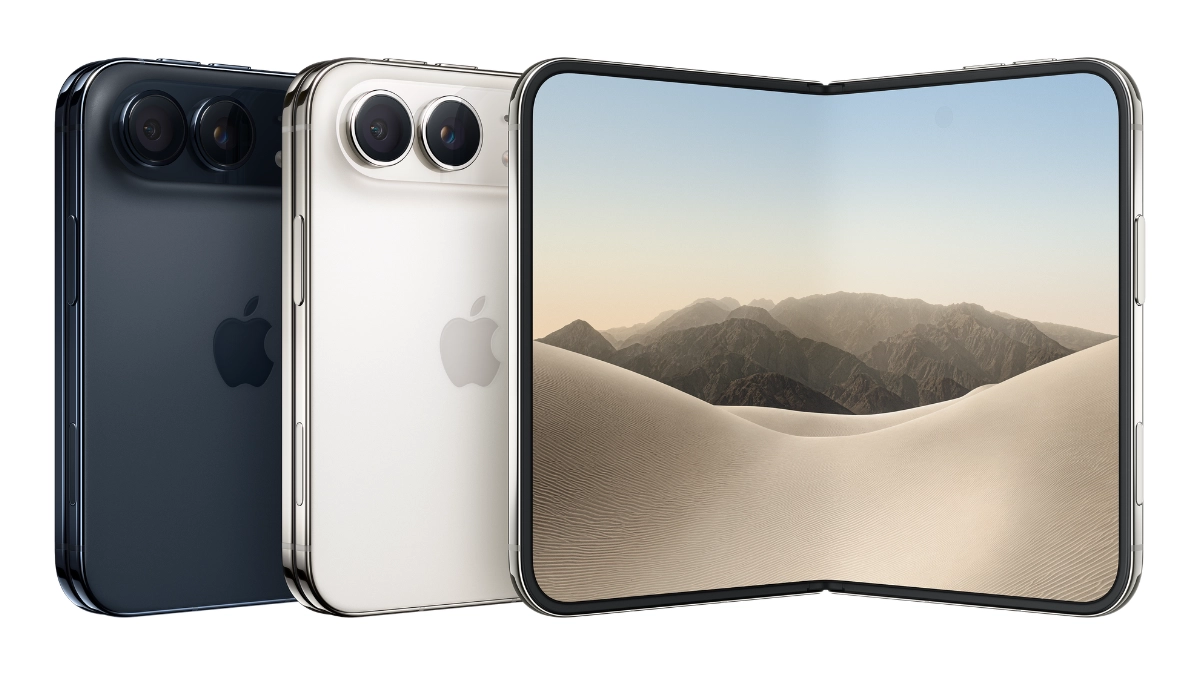
Apple rarely arrives first. It arrives late, quietly studies what everyone else got wrong, and then ships the version that becomes the reference point. The iPhone Duo — Apple's first foldable — is that playbook again, and it lands in a category Samsung, Huawei and Honor have already spent six years shaping.
The hardware is the easy part
What Apple has clearly solved is the thing foldables have always been judged on: the crease. The Duo uses a hinge built from more than 100 components and an elastic adhesive layer that lets the display laminate slide over itself "like the pages of a book." The Verge's Nilay Patel, handling the device at Apple's event, said the crease was genuinely hard to spot. It isn't invisible — tilt the panel and look for it and you'll find it — but it's no longer the first thing you notice.
The rest of the package is confidently built and quietly compromised. A titanium frame with a mirror finish, a matte anti-glare coating, the A20 Pro with a 7-core GPU promising 40% faster graphics. But the cameras — two 48MP sensors with 2x optical zoom, plus an under-display selfie camera — are merely adequate by 2026 flagship standards. And Face ID is gone, replaced by Touch ID in the side button. On a $2,000 phone, those are real concessions to the form factor.
The software is the actual argument
The more interesting story is iOS 27. Apple didn't stretch the iPhone interface across a bigger panel; it rebuilt the grammar of the OS for a screen that changes shape. The Dock moves to a vertical strip on the right edge. The Dynamic Island rotates to match. The status bar collapses into simple circular icons. Dynamic blur carries you between the folded and unfolded states without the visual jolt that makes most foldables feel like two phones sharing a battery.
That integration is the pitch. As analyst Tuyen Dang put it, optimizing iOS for the mechanics of folding is a substantial advantage — the same reason people buy iPhones in the first place.
The price says what Apple thinks it is
$1,999 for the 256GB model globally. Analyst Liz Lee called it "bold positioning under $2,000" — and the phrasing matters. Apple isn't undercutting anyone. It's planting a flag just below a psychological ceiling and daring the category to price above it.
What it means
The Duo won't win on specifications. It isn't trying to. Apple's bet is that the foldable problem was never the hinge or the sensor stack — it was that nobody had rewritten the software to make a folding screen feel like one coherent device. If that bet is right, the Duo won't be the best foldable on paper. It'll be the one everything else gets compared to.