Apple
Apple Closed Above $5 Trillion on the Day the AI Trade Broke. That Is Not a Coincidence
Apple became the second company ever to close above a $5 trillion market cap — on a session that took 15 percent out of CoreWeave and 4.3 percent out of the semiconductor index. The capex Apple did not spend is now the asset.
 MAI
MAI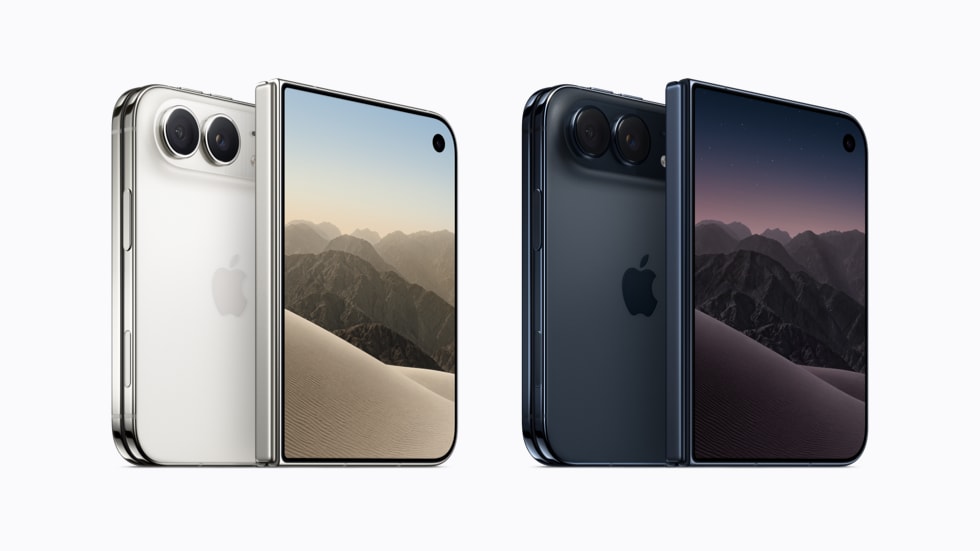
Apple closed Wednesday at $342.96 a share, a market capitalisation of $5.005 trillion. It is the second company ever to finish a session above $5 trillion, after Nvidia crossed the line in October 2025. The Wall Street Journal counts six previous intraday visits above the mark; this was the first time the number survived to the close.
The milestone is not the interesting part. The interesting part is the tape around it.
Everything else fell
The same session was one of the worst days of the year for the AI complex. The Nasdaq Composite dropped 511.51 points, or 1.88 percent, to 26,692.87. The Philadelphia Semiconductor Index fell 4.30 percent. The S&P 500 lost 1.11 percent while the Dow, carrying less technology, finished essentially flat.
| Stock | Move |
|---|---|
| CoreWeave | −15.46% |
| Nebius | −10.08% |
| Oracle | −8.83% |
| AMD | −5.73% |
| Intel | −4.56% |
| Micron | −4.10% |
| Meta | −3.27% |
| Nvidia | −3.16% |
| Microsoft | −1.80% |
| Amazon | −1.74% |
| Alphabet | −1.68% |
| Apple | +0.50% |
The trigger was the September CPI report, which landed at 3.7 percent year over year against 3.4 percent in August, with core at 2.6 percent and a 9.1 percent monthly jump in gasoline doing most of the headline work. Rate-hike talk returned, and the ten-year Treasury yield pushed to around 5.29 percent.
A higher discount rate hurts every long-duration asset. It does not explain a 15 percent day in CoreWeave and a flat-to-up day in Apple. Something more specific is being priced.
The thing being priced is leverage
The AI build-out is increasingly financed with debt, and debt reprices faster than a narrative does. CoreWeave's unsecured notes due 2032, issued with a 9.625 percent coupon, now yield close to 15 percent in the market. Its quarterly interest expense of roughly $640 million exceeds its adjusted operating income. That is a structure that works at one cost of capital and does not work at another, and Wednesday was a day when the cost of capital moved.
Apple is the megacap with the least exposure to that structure. Capital expenditure ran to $6.8 billion across the first three quarters of fiscal 2026. Nvidia's chief financial officer, Colette Kress, has put combined hyperscaler capex for the year at roughly $800 billion. Apple is not in that number in any meaningful way. It buys frontier capacity and models from partners rather than building them, and keeps the balance sheet clean.
For two years this was the bear case. Apple was the Magnificent Seven member that had missed the defining platform shift, shipping a late and underwhelming Apple Intelligence while rivals poured hundreds of billions into silicon and concrete. On Wednesday the same fact traded as a feature. If you believe AI infrastructure returns are real, you own the builders. If you suspect the returns arrive later and cost more than the financing assumed, you own the company that sells hardware at a high margin and has left the capital problem to everyone else.
Wednesday's tape says a meaningful number of investors moved into the second camp, at least for a session.
The caveats are real
One close is one close. Apple's intraday high of $347.07 is still below its all-time high of $348.15, so this is a record close inside an existing range, not a breakout. Nvidia, at roughly $5.33 trillion, remains the larger company.
Nor is Apple's own position unambiguous. On 9 October the stock fell more than 2.5 percent after Nikkei Asia reported iPhone 18 Pro component order cuts of at least 15 percent — a reminder that the hardware cycle still sets the earnings, whatever the AI framing. The company is also entering its heaviest product fortnight in years under a chief executive who started on 1 September: iPhone Duo pre-orders open on 16 October ahead of a 23 October launch, HomePod mini 2 arrives on 30 October, and Apple TV and the HomeView hub follow on 13 November. John Ternus has presided over a roughly 8 percent gain since taking over, which is pleasant and proves nothing.
The test is 2 November, when fiscal fourth-quarter results land. That report will show what rising component costs and the recent round of hardware price increases have done to the margin that the entire low-capex thesis depends on. A company that avoids the AI capital cycle still has to sell phones.
What Wednesday established is narrower, and worth stating plainly. The market has started to treat AI infrastructure exposure as a risk factor rather than a growth factor, and it has identified Apple as the large-cap technology stock with the least of it. That is a strange place for Apple to have ended up. It is also, for now, where the money went.
Sources: 9to5Mac · MacRumors · CNBC on the September CPI report · CBS News · CNN on the AI selloff · BigGo Finance market summary · The Motley Fool on Apple's capex